How key economic decisions shaped India’s growth story
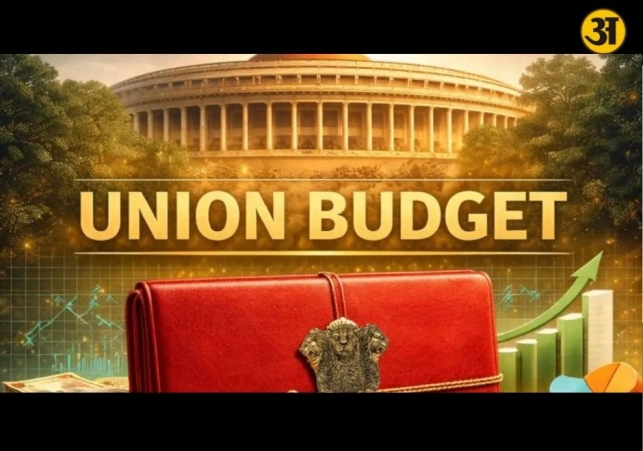
Union Budget 2026: milestones that shaped India’s economic journey
India is preparing for Union Budget 2026 at a time when the country continues to be one of the fastest-growing major economies in the world. Earlier this week, Finance Minister Nirmala Sitharaman presented the Economic Survey in Parliament, giving a broad picture of the country’s economic condition and future outlook. The survey estimated that India’s economy could grow between 6.8 and 7.2 percent in the financial year 2026–27. Although this is slightly lower than the estimated growth of 7.4 percent in the current year, India still remains ahead of many global economies that are struggling due to international uncertainty.
The Economic Survey said India’s growth remains stable because domestic demand, infrastructure development, and innovation continue to support the economy. However, it also warned about certain risks. One concern is fiscal populism by some states, where heavy spending without strong revenue growth can create financial pressure. Another challenge mentioned is agriculture, where sustainability and productivity issues remain serious. The survey suggested encouraging farmers to voluntarily diversify crops to protect soil health and improve long-term income.
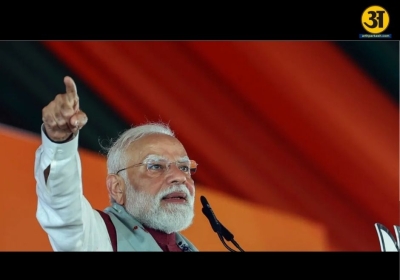
Prime Minister Narendra Modi also highlighted that the survey provides a roadmap for building a developed India. He said the country’s strong macroeconomic foundation, innovation, entrepreneurship, and infrastructure investments are helping the nation move forward.
To better understand how India reached this stage, it is useful to look at key economic decisions that shaped the country’s journey after Independence.
Planned growth phase
After Independence, India adopted economic planning through five-year plans to rebuild and strengthen the economy. In 1953, economist Prasanta Chandra Mahalanobis designed a model for the Second Five-Year Plan that focused on building heavy industries and capital goods production. Instead of depending only on agriculture, India invested in steel plants, engineering industries, and public sector companies.
This period saw the creation of major industrial organisations such as BHEL, SAIL, and BEL, which provided jobs and supported industrial growth. The goal was to build a strong industrial base so India could become self-reliant in manufacturing.
In the mid-1960s, agriculture became the focus again because India faced food shortages. Under Prime Minister Lal Bahadur Shastri, the Green Revolution began in 1965, guided by agricultural scientist Dr M.S. Swaminathan. Farmers started using high-yield seed varieties, irrigation systems, fertilisers, and modern equipment. As a result, food grain production increased sharply, helping India reduce dependence on food imports and raising farmers’ incomes.
Another major change happened in 1969 when Prime Minister Indira Gandhi nationalised 14 major banks. The decision aimed to make banking services available to rural areas and small industries. It helped farmers and small businesses access loans and encouraged savings among ordinary citizens.
ALSO READ: Venezuela opens oil sector to private companies under new law after political upheaval
ALSO READ: Trump warns Iran next attack will be far worse if no nuclear deal is reached
Reform and modern economy
A turning point came in 1991 when India faced a severe balance of payments crisis. Foreign exchange reserves had fallen dangerously low, forcing the government to take urgent steps. Under Prime Minister P.V. Narasimha Rao and Finance Minister Dr Manmohan Singh, India introduced economic reforms known as Liberalisation, Privatisation, and Globalisation, often called LPG reforms.
These reforms reduced government control over industries, ended the License Raj, lowered import duties, encouraged private sector participation, and opened the economy to foreign investment. The rupee was also devalued to improve exports. These changes connected India more strongly with global markets and helped the private sector grow rapidly in areas like information technology, services, and manufacturing.
Another big economic decision came in 2016 when the government demonetised high-value currency notes of ₹500 and ₹1000. The move aimed to reduce black money and promote digital payments. Though controversial and challenging in the short term, it accelerated the adoption of digital payment systems like UPI, making cashless transactions common across cities and villages.
In 2017, India introduced the Goods and Services Tax (GST), replacing multiple state and central taxes with a single nationwide tax system. GST aimed to create a unified national market under the idea of “One Nation, One Tax.” It improved transparency and made interstate trade easier for businesses.
Later reforms further simplified GST into fewer tax slabs to reduce compliance burdens and encourage business activity. Over time, GST collections have grown, becoming an important revenue source for governments.
Today, India’s economy is driven by infrastructure development, technology growth, renewable energy expansion, digital services, and manufacturing initiatives. Government spending on roads, railways, power, defence production, and urban development continues to support economic momentum.
As Budget 2026 approaches, expectations remain high that policies will focus on sustaining growth, controlling inflation, supporting agriculture, and expanding employment opportunities. India’s economic journey shows how different policies across decades have shaped the nation’s present position, and future budgets will play an important role in guiding the next stage of growth.
Related News